I wrote a poem and I mentioned the term Planck constant. A Sista messaged me to ask, “What is Planck constant? Is it like planking?” (which we have been obsessed with in the Fab4050 60 Day Challenge). So here it is.
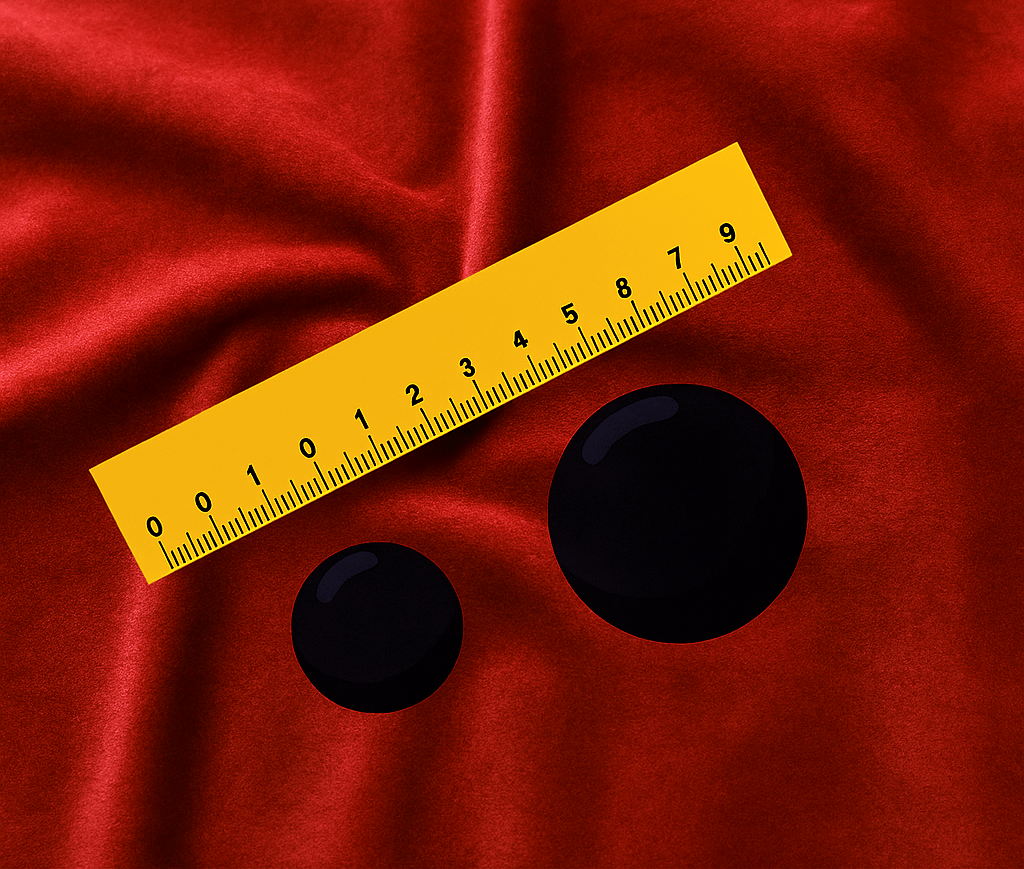
The Planck constant is like the ruler for measuring how tiny and strange the quantum world is.In everyday life, things seem smooth and continuous—like turning up the volume gradually or pouring water. But in the quantum world, energy comes in tiny, indivisible packets, and the Planck constant tells us how small those packets are.
I thought long and hard about how I could depict Planck constant for the layperson, and it’s this semi-blurry portrait of me.
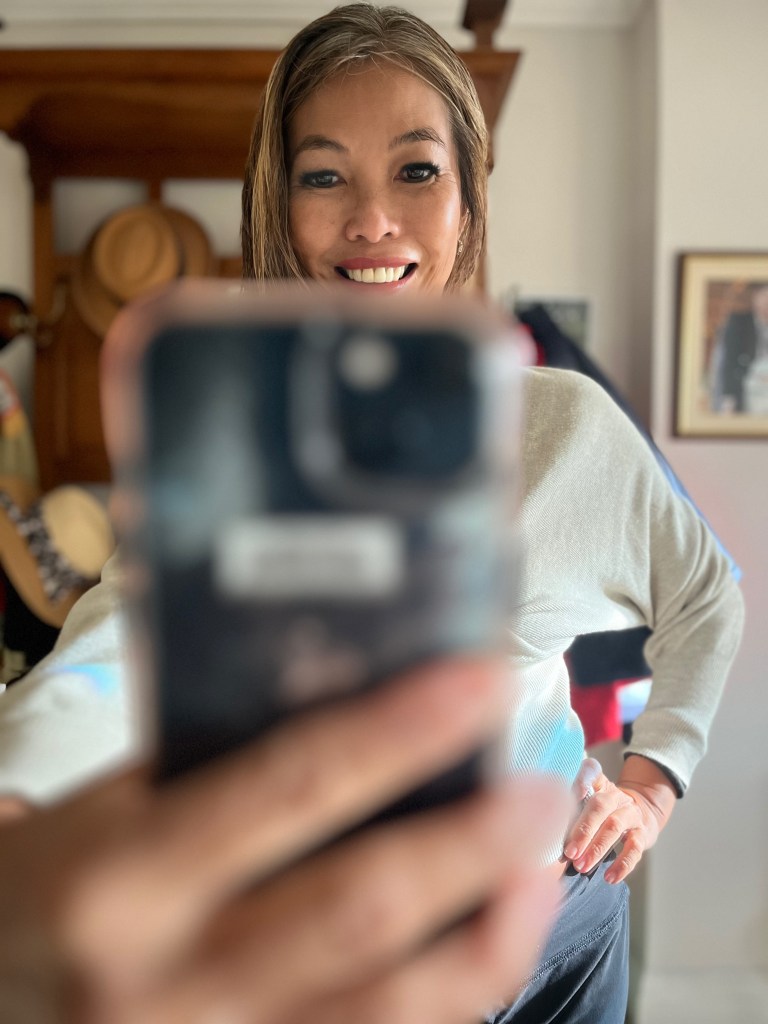
Imagine trying to zoom in on a photo until you see the tiniest details—like the atoms in someone’s skin (or my wrinkles, but hey, I own them, I am 57). At first, everything sharpens. But as you zoom further, the image starts to blur—not because your camera is bad, but because nature itself refuses to be pinned down beyond a certain point.
That blur is the Planck constant in action.
It’s the cosmic rule that says:
“You can’t know everything about a particle—its position and momentum—at the same time with perfect clarity.” (Much as you would like to know everything).
Just like a photo pixelates when you zoom too far, quantum reality becomes fuzzy when you try to measure it too precisely. The Planck constant sets the minimum grain of that fuzziness—the smallest unit of action in the universe.
I’m sharing this on the blog because the Planck constant connects directly to something rapidly emerging in our lives: quantum computing.
Planck and quantum computing
The Planck constant is crucial in quantum computing because it defines the scale at which quantum effects become significant, governing how information is encoded, manipulated, and measured at the quantum level. Technical stuff about Planck:
- Defines Quantum Behaviour Quantum computing relies on phenomena like superposition and entanglement, which only emerge at scales where the Planck constant is non-negligible. If hh were zero, quantum mechanics would reduce to classical physics then we would be back to this “real” world.
- Qubit Dynamics The evolution of qubits—quantum bits—is governed by the Schrödinger equation, which includes ℏ=h2π\hbar = \frac{h}{2\pi}. This constant determines how quantum states evolve over time.
- Energy Quantisation In quantum systems, energy levels are discrete, not continuous. The spacing between these levels is proportional to hh, which is essential for designing and controlling quantum gates and transitions. (You might remember from school: the energy levels of electrons in atoms).
- Uncertainty Principle You have heard about Schrodinger, now it is Heisenberg’s uncertainty principle, which sets a fundamental limit on how precisely we can know a qubit’s position and momentum (or other conjugate variables). This underpins the probabilistic nature of quantum computation.
- Quantum Measurement Measurement in quantum computing collapses a qubit’s state into a classical outcome. The probabilistic rules governing this collapse are rooted in quantum mechanics..
- Quantum Simulation and Algorithms Algorithms like quantum Fourier transform and Hamiltonian simulation depend on precise control of quantum phase and energy.
Without the Planck constant, there would be no quantum mechanics—and thus no quantum computing. It’s the bridge between the abstract mathematics of quantum theory and the physical reality of quantum devices.
Experiencing Planck at home
Hold a red LED and a blue LED. Know that the blue one emits higher-energy photons—not because it’s brighter, but because its frequency is higher. That energy difference is proportional to the Planck constant. You’re holding quantum steps in your hand.
The Poem I wrote
If I could rewind the clock,
Slip through the gears of time’s lock,
And choose a different thread in the quantum maze—
Not the one I walked,
but one ablaze
With paths unmeasured,
yet known to me
In Planck-scale pulses of possibility.
I’d re-choose my future in the smallest beat,
Where constants whisper and timelines meet.
No longer blurred by Heisenberg’s hand,
But clear—
like stars I finally understand.
A different spin, a gentler wave,
A choice unmade, a self to save.
Not regret, but reverent grace
For all the lives I didn’t chase.
 www.Fab4050.com